
Judge not, lest ye be judged: what is religious fetishism
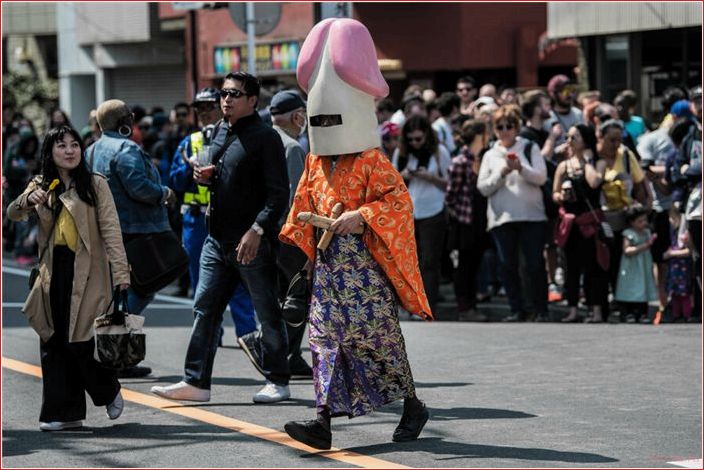
For many people, the word “fetishism” connotes high-heeled shoes, bare female legs, or a thick male beard on the head. All this could be a fetish. But the concept itself has deeper roots.
Contents of the article:
Fetishism is one of the forms of religious cults, when primitive people endowed inanimate objects with supernatural properties. They believed in the magical behavior of these objects and worshiped them. This form of religious worship continues today.
The concept of fetishism and its forms
Translated from Portuguese, this word means “magic”. People believed that certain objects could influence and change their lives. This attitude has found expression not only in the cults of our ancestors, but also in the modern world.
As part of religious fetishism, people believe in amulets, talismans, relics and amulets.
These are also fetishes. The church attributed miraculous powers to the relics, and people began to revere them.
A relief in most religions is a relic, or a special object that could belong to a significant person (god, saint, prophet).

In a figurative sense, these are simply objects that are especially revered and can be passed down from generation to generation or preserved as a memory of the past.
- Amulets and talismans.
It”s the same fetish. People endowed with differences simply because the names themselves appeared at different times and in different places.

According to people, amulets should protect the person who owns them from various disasters and failures in life. Amulets give good luck, happiness and act as talismans.

People who believe in the power of amulets and talismans constantly carry them with them, believing that they can protect them from diseases and other troubles. Often these same people forget that many problems can be avoided if they behave correctly. You can even protect yourself from yourself.
The simplest talismans are objects, often of unusual shapes, bright colors or unusual objects. They were made in the form of jewelry: rings, necklaces, seriosacs.
It could be any other topic: it all depends on the culture of a particular people and their beliefs.
Often amulets were made in the form of images applied to homes, sanctuaries and tomb walls. In Ancient Egypt, for example, the image of the Eye of Horus was popular on amulets made of precious and semi-precious stones.
Some cultures used nuts, vegetables and herbs as amulets. Garlic, for example, was supposed to repel vampires.
In ancient times, iron was very rarely prescribed as an effective weapon against all evil spirits. Later, having become a full-fledged weapon in the hands of man, iron became a tool against other real enemies.
Read also: Tattoos for men: history, types and meaning
Nowadays, it is very common to meet men with tattoos. Decades ago, drawings on the skin were rare, but now the situation is radical.
The amulets were created intentionally. Using various materials — metal, wood and stone — the creators applied special protective symbols. They were then given to the needy, who benefited from it.
It is not known for certain how amulets protected and brought prosperity to those who wore them. But the fact remains: they enriched their creators.
- Physiological fetishism.
Smoothly flowing from religion, fetishism found its place in the optional worship of genitals, living bodies and their owners. This fetishism is often confused with love.
Some people consider sexual fetishism a perversion. For example, fetishists worship only individual parts of the body that belong to them, and not the entire woman. People are obsessed with hair, legs, genitals, hands, etc.
He is also obsessed with toiletry items such as stockings, shoes and underwear.
As in the worship of idols, as in the use of amulets and talismans in sexual fetishism, the main thing is the worship of another object — the hair dryer. An obsessive person goes to great lengths to master what attracts him.
He may steal idols, shoes and other personal clothing. Some even have access to his hair. Alone with his fetish, a person can fall into ecstasy and even masturbate at the sight of it.
In any fetishism, religious or sexual, a person tries to master what attracts him. They give him pleasure, make him special, and, as he believes, the quality of his life depends on them.

Sexual fetishes//norm/pathology
More about religious fetishes
Each fetish had its own specific purpose. To control the weather, some had to protect their homes to make it rain.
For example, the snake was revered in Uzbekistan. It represented the origin of good and evil. The male principle, bull worship, was also integrated into the cult. Camels, horses, and lions were also present.
The Siberian people of Ketovo had a striking fetish object—the Alera doll. It was made of wood and wore traditional clothing. Depicted as an old woman, the doll was made to protect the home and its inhabitants. The fetish was passed down through generations; it was sacredly protected and always carried with it.
And here are some types of religious fetishes:
- National fetishes.
Tam-tams, masks, and figurines were a kind of bridge between the spirit world and the world of life. Even in the modern world, these objects are used in ceremonies and other special occasions.
Some people hold drums in special reverence. They consider us revered, respected, and spiritual beings. To ensure that the drum acquired great power, it became an offering.
Each instrument was assigned a performer, and the drum could only be touched after a special initiation ceremony.
When a person was just beginning to tell a story, the first fetishes appeared. Among them were axes made of stone. These axes were believed to be petrified lightning bolts from the pharaoh”s god of thunder and lightning.
Historians have counted about 20 different fetishes among the African Karun tribe. They included drums, stools, elephant tusks, and sacred stones.
Such objects could only be acquired from local magicians. Fetishes were supposed to protect against misfortune and illness. However, since their behavior was unpredictable, they were often made in an attempt to pacify and soothe.
- Fetishism in the modern world.
For example, in Christianity, relics, icons, and crosses are venerated. In Buddhism, sacred stupas are venerated. Various horseshoes shaped like cakes, pendants, elephant figurines, and even toys are considered religious fetishes.
Thus, fetishism is the desire to possess something that is supposed to bring its owner happiness and health in a certain area of their life. Originating with religion and idol worship, fetishism has transformed and adapted to modern realities.
But its essence has remained the same. People worship ideologies, goods, and sexual practices. Sometimes this behavior is even considered a spiritual deviation, and they actively try to cure it. But in religious fetishism, they have simply retired.


