
We tell the story of the creation of the Moulin Rouge cabaret in Paris
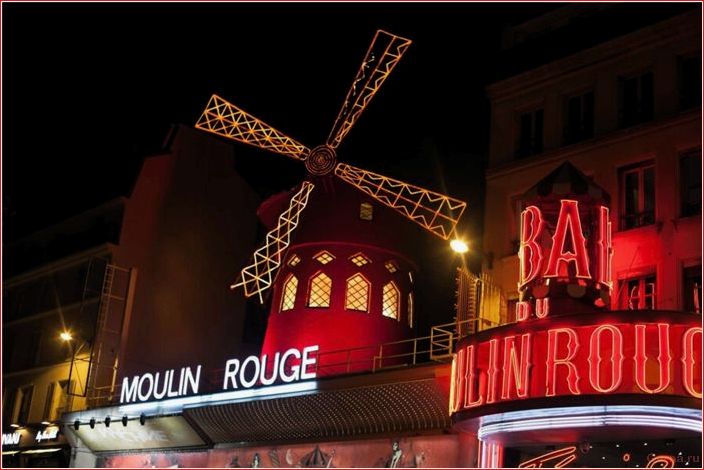
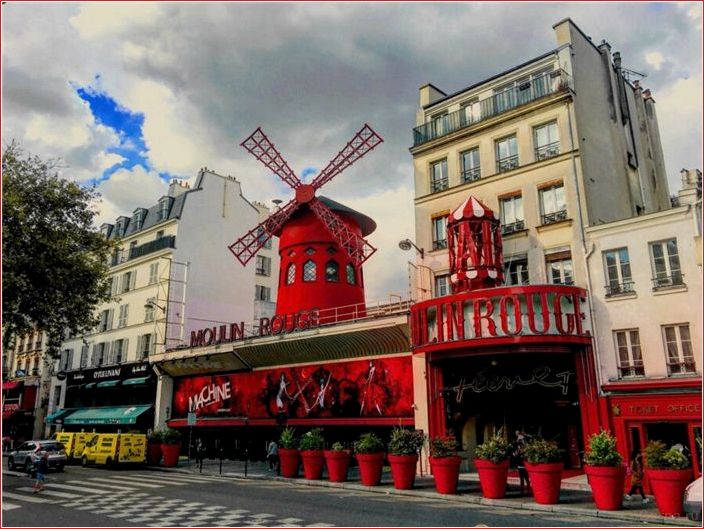
The Moulin Rouge is a famous cabaret in Paris. The original house, which burned down in 1915, was founded in 1889 by Charles Zidler and Joseph Olah, owners of the Paris Olympia. The red windmills on the roof can be seen near Montmartre in the Pigalle quarter of Paris on Boulevard Clichy in the 18th arrondissement.
Contents of the article:
The cabaret has a grandiose history, a huge number of books have been written about it, seven feature films have been made and God knows how many documentaries. Unfortunately, today the Moulin Rouge has lost some of its former charm and cultural significance, but its history is forever linked with the history of 20th century art.
Moulin Rouge, the birth of a legend
Following the defeat of Napoleon III in the Franco-Prussian War of 1870 and the ensuing economic depression that lasted until 1896, France rejected its past and attempted to heal its wounds. This drove out the horror wars for a while. This heady optimism was felt throughout the country, but most fully in Paris, a city known for its liberationist views.
During this period, Europe enjoyed positive dynamics, including scientific innovation, artistic and literary breakthroughs, regional peace, and social, political and economic progress. The French capital itself was in the process of reconfiguration and modernization. Middle-class Parisians took advantage of their newfound wealth, gaining free time and disposable income to spend in cafés, cabarets and music halls. This was the period that became known as the Belle Epoque. At the center of this 40-year golden age was the Montmartre district, which became a symbol of the time.
It was against this backdrop that the Moulin Rouge was first opened to the public on October 6, 1889. Located at the foot of the lively Montmartre district, the cabaret became an immediate success. All this was made possible thanks to the vision of two businessmen who had their finger on the pulse of Paris.
Joseph Olah and Charles Zidler founded a colorful and bold entertainment venue for people from all walks of life, from the richest to the humblest working class. The atmosphere was electric. The bourgeoisie who loved debauchery went there to socialize with the ladies of the night. Artists and writers could enjoy the exciting atmosphere and gather material that would inspire their best work.

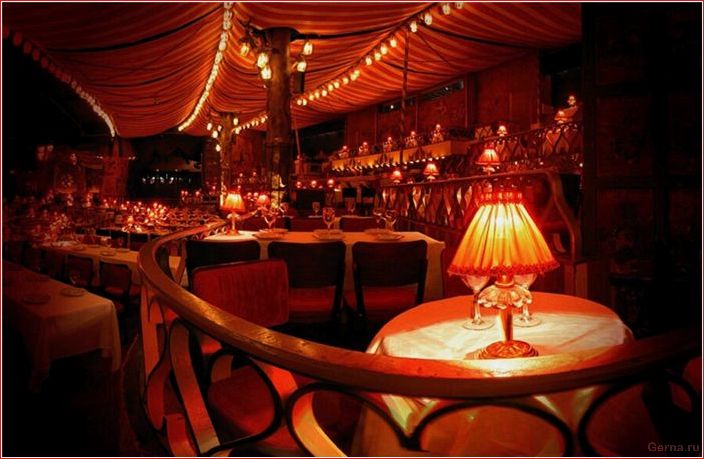
Initially, the Moulin Rouge hosted champagne parties where famous dancers performed. At the same time, the world famous quartet known as the “French Cancan” was born. During performances at the Moulin Rouge, drinks were served and spectators sometimes danced on a dance floor set up to allow them to watch the performers up close. With its unusual architecture and extravagant decor, the Moulin Rouge skillfully attracted customers who simply wanted to have fun.
Located on the corner of Boulevard Clichy and Place Blanche in Paris, it”s hard to miss thanks to its scarlet colors and radiant light. Every evening, when the curtain falls, clients leave the cabaret with sparkles in their eyes! Over a delicious dinner, immerse yourself in the magic of an unforgettable show.

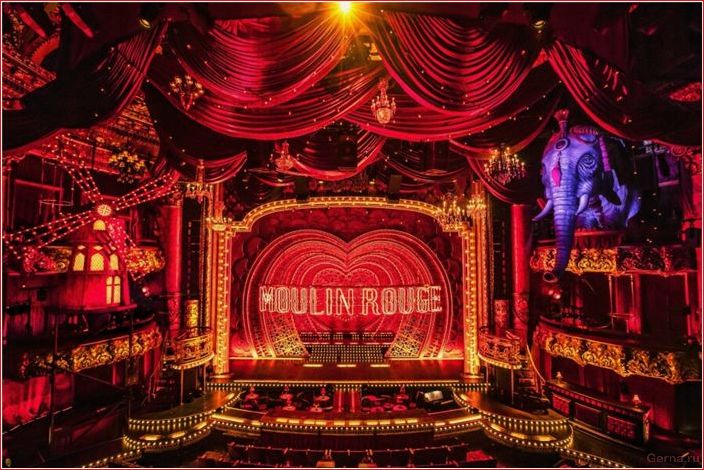
The unified effect of luxurious flowers and jewels, a huge aquarium and paintings by famous Italian artists immerse you in a world of complete enchantment. In French, “charming” or “magical” can be translated as “fairy”, which is how his latest show “Ferry” gets its name.

The show features dozens of performers (80 years to be exact), including 60 professional dancers called the Doris Girls, carefully recruited from all over the world. The show features nearly a thousand feathered and glittery costumes made in elite Parisian tailoring workshops, carefully crafted to seductively reveal the dancers” elegant silhouettes.
The cabaret presents the best international shows and puts on unusual numbers. The music is completely original and recorded by 80 musicians and 60 singers. Despite the sensual content of these “music hall shows”, “The Rouge” is open to all audiences, including children aged 6 years and over (accompanied by an adult).
Origin of his name
Built at the foot of Mount Montmartre, the Moulin Rouge (French for “Red Mill”) opened in 1889, the same year as the Eiffel Tower. Although its name is associated with a legend describing the events of the distant 1814.
In March 1814, fighting began in Paris that led to the fall of Napoleon. The city of Paris was a true war zone due to the fighting between French and opposing forces (Russian, Austrian and Prussian allies). At the foot of the strategically very important Montmartre mountain, the Russians prepared to attack. According to legend, when they began to advance along the hill, they encountered a stubborn enemy. The four De Bry brothers, Miller and Occupation fought bravely to stop the Russians from storming the mountain and seizing their only property: the family mill!
Read also: History of the emergence and development of beauty contests
Today, traditional beauty pageants are not as popular as they used to be. Nowadays, there are many ways for beautiful women to express themselves.
After three of the four brothers were killed during the attack, the last brothers gathered their remaining strength and courage and brought down the Russian commander with a single pistol shot. The Russians were very angry and, in order to avenge their boss, they captured the remaining brothers, and his body was cut into four parts and stopped in the sails of their mill.
As darkness fell, the unfortunate wife of the murdered man was depressed and grief-stricken, and the body of her unfortunate husband was secretly taken away and left in a bag of flour. As for the mother of the dead brothers, she honored their memory and placed a small red mill on each grave. If you visit Calvary Cemetery (at the top of the Montmartre hill) you will still find these small mills.
Why is the Moulinrouge red?
Is it red in honor of the Wilderness brothers?
The color was not chosen by chance, and vice versa. The color red is often a symbol of love, passion and eroticism, so it can often be found in places intended for pleasure. This is one of the brightest and most attractive shades! It is therefore not surprising that this is the most attractive and visible cabaret north of the grand boulevards.
The Moulin Rouge is one of the must-see monuments of Paris. An interesting fact is that it was the first building in the city to be electrified. Thanks to the unusual architecture and the many lights illuminating its façade at night, the cabaret is easy to spot from afar.
Moulinrouge, icon of Paris
Since the bohemian period known as Belle Epoque, the Moulin Rouge has been an iconic part of the Boulevard Clichy. Designed by the architect Adolphe Willette (1857-1926), this Parisian icon is the most famous cabaret in history. In 1915, the building was destroyed by fire and the cabaret was closed for six years. The Moulin Rouge reopened its doors in 1921, three years after the end of the First World War.
Cabaret success
Its creators were the Spanish entrepreneur Joseph Olah (1839-1922) and the French impresario Charles Zidler (1831-1897), who put forward the idea of the Moulin Rouge. They opened their first doors on October 6, 1889.
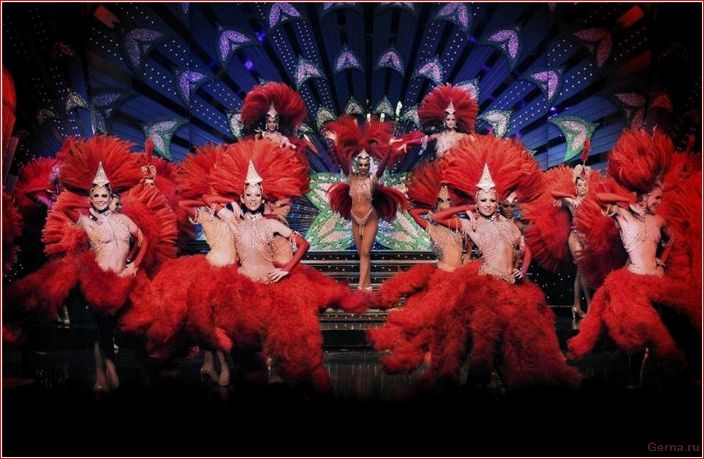
Their inspiration was the famous Moulin de la Galette, which still stands on top of the Montmartre hill today. Until the 1950s, they were styled as a gingwitz, a kind of open-air cafe or dance hall where people came to drink, dance and generally have a good time. These gingvites were mainly located in satellite cities of Paris and were very popular as places of entertainment. When the factories of Montmartre were threatened with destruction, they were turned into cabarets or gingwitz, and Montmartre became one of the most fashionable corners of Paris.
The new Moulin Rouge has a large dance floor and the courtyard has been turned into a beautiful garden. A huge plaster elephant was installed here on the occasion of the 1889 World”s Fair.
Frills and thrills
As befits a temple dedicated to music and dance, the Moulin Rouge showcased the talents of the most famous dancers of the time. But it was the variety of square dance created by Celeste Mogadore at Mabel”s ball in 1850 that formed the basis of the French cancan dance with which Parisians are synonymous. At that time, square dance was very fashionable, especially when performed to the music of Jacques Offenbach. However, oddly enough, it was on the other side of the London Canal that the French cancan in the form in which we know it was created. Charles Morton, a music hall owner, caused outrage in the dance world in 1861 when he performed with a dance troupe.
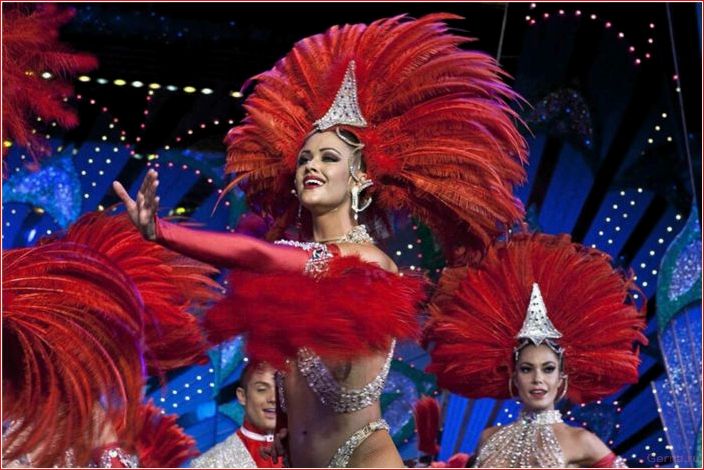
Fun, scandalous, charming and irreverent, the French cancan was a frenzy of black stockings, bare legs, garters, frilly panties, lace, high legs and swirling skirts that were considered quite shocking at the time.
Naturally, this delighted the regulars of the Moulin Rouge. Many dancers, such as La Goulue, Miss Jenny and Nini-Pattes-en-l”Air, became symbols of the Parisian cabarets, seducing clients with their quirks and thrills. Scenes of violence were repeatedly depicted by the great French artist Henri de Toulouse-Lautrec in some of his most famous works.
The Moulin Rouge show and its stars
Most cabaret shows take their ideas and inspiration from the world of circus. Posters by famous artists such as Renoir and Toulouse-Lautrec adorned the walls and contributed greatly to their fame. Henri de Toulouse-Lautrec was a French artist and frequent visitor to this area. It was his posters that immortalized the largest music hall in the Moulin Rouge.
In 1903, the cabaret was rebuilt in a completely new Art Nouveau style by the French architect Edouard Niemann (1859-1928).
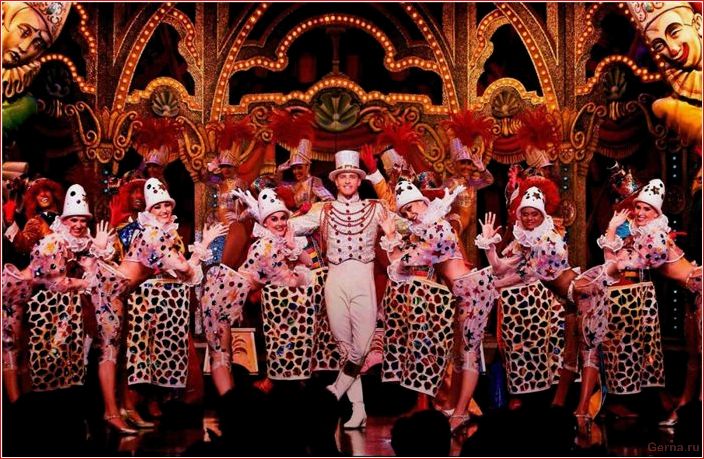
Moulin Rouge” is all about “French cancans”! Their names are largely forgotten today, but many of these cancan artists, dressed in glamorous costumes, dancing to exuberant music and whipping the crowd into a frenzy, were bona fide stars in their heyday. Among these forgotten celebrities were Yvette Guilbert, La Gule, Nini Pathé en Aire, Momand Fromage, Jane Avril and, of course, Miss Tanguette. Other stars such as Jean Gabin, Edith Piaf and Yves Montand contributed to the success of the Moulin Rouge by performing on its famous stage.
When Mistangue left the theater, the 1, 500 seats were converted into a dance club during World War II; despite performances by Edith Piaf and Yves Montand in 1944, the Moulin Rouge did not flourish.
Although it is often believed that the cancan was danced only by women, some men, such as Valentin Le Desos and the famous Joseph Pujol Pettman, were also adept at dancing the cancan.


