
How to determine a woman”s or man”s temperament, and what to do if they don”t match?

Do you sometimes feel like you”re with an alien instead of your partner? Has he or she really changed so much that it”s impossible to understand their behavior? What once fascinated and attracted me now drives me crazy? Welcome to a world where temperaments don”t match.
Contents of the article:
Why is one person”s behavior so different from another”s? And what should we do about it? The theory of the four temperaments, developed by Hippocrates in 400 BC, answers these questions.
Personality and Temperament
Temperament is a biological, innate, and genetic component of personality, linked to the nervous system. Temperament remains virtually unchanged throughout life. It determines the basic direction of work and behavior, including emotional reactions, sensitivity, resistance to stimuli, decision-making speed, and impulses.
Personality is an innate, partially acquired mental structure, partially based on temperament. Personality is described by many terms, such as introversion, extroversion, conscientiousness, prudence, openness to experience, and so on. These definitions depend partly on temperament and partly on the environment. Personality is more susceptible to change than temperament.
According to Hippocrates” theory, differences in behavior correspond to the four dominant humors in the body. Four types of men and women emerged from Greek objects. Each person belongs to one or more of these types and combines these functions to varying degrees.


When temperaments clash, it”s important to clearly understand that this is a natural process of interpersonal relationships.
How to recognize a sanguine person?
Sanguines have the most volatile emotions of all the types. This largely depends on what”s happening at the moment. On the other hand, they are the most joyful and enthusiastic personality type. Their emotions are like a large sine wave, and they can experience intense euphoria or fall into the deepest pit of despair.
Sanguine loves people, opportunities, experiences and pleasures. He tries to avoid unpleasant and tedious problems and will not tolerate the absence of people in his environment for long. He acts quickly and impulsively. Sanguine people need attention, praise, compliments and appreciation.

The biggest potential benefits of being a sanguine person are:

- Cheerful and optimistic.
- Sociable, often the life of the party
- Likes to talk and joke
- Enthusiast, quick to get excited about new ideas
- Spontaneous and quick to work
- Honest and resourceful
- Curious and interested in the world and its people
- Creative and intelligent approach to problem solving
- Loves to play and creates a good atmosphere
Sanguine”s Biggest Potential Disadvantages
- Forgetful and mixed otic
- Disorganized dirty guy
How to recognize a melancholic person?
Another type — melancholic — is prone to deep and strong emotions. Of all the types, it is most affected by stress. The enormous sensitivity is both an advantage and a disadvantage. He is so impressionable that it is easy to offend him. More often than others, he experiences states of depression and despondency.

Needs must be met in order to feel safe. Therefore, it is organized and important things for them are thought out to the smallest detail. Potential problems are anticipated and resolved in advance. Sudden changes in plans and situations can be stressful for him. Melancholic people do not act under the influence of impulses. What he says and the decisions he makes are usually well thought out. A melancholic person needs sensitive treatment, sincere praise and stability.
The biggest potential benefits of being melancholic:
- Sensitive and gentle.
- Purposeful, skillful and discreet
- Thoughtful, good at analyzing facts and details
- Neat and detail oriented
- Talented, creative, aesthetically pleasing, loves beauty
- Conscientious and perfectionist
- Obedient, inclined to follow rules and regulations
- Responsible, thinking — makes decisions
Read also: How to understand that a man likes a woman and recognize sympathy
For a man, if a girl”s happiness is higher than his own, he has truly fallen in love. However, understanding a man”s feelings can be very difficult. If he.
Melancholic”s biggest potential downside:
- Often interprets things unfavorably when situations are ambiguous
- Overanalyzes instead of taking action
- Too conservative, afraid of problems
- The cartilages of the lower articulation react with increased sensitivity to every signal from the body
- Cannot tolerate noise, large crowds of people, stressful situations
How to recognize a choleric person?
Kolerik has a very stable emotional state. He is optimistic and radiates energy as everything goes his way. However, when something goes against his plans, it usually causes outbursts of anger and irritation. In this case, he often directs all emotions to the person responsible for the failure, or to someone nearby.
Choleric loves clear goals and their precise implementation. He loves to lead, is not afraid of responsibility and is confident in his abilities. A choleric person works quickly under the influence of impulses. This allows him to achieve a lot in a short time, but on the other hand, he often hurts others. The Chorelic must be aware of his intelligence and his contribution to any business. He loves when his decisions and resourcefulness are appreciated.
The greatest potential benefits of choleric:
- Natural and born leader
- Likes to be very active
- Quickly makes the right decisions that lead to achieving goals
- Bold and innovative and can do the impossible
- Persistent in their work and achieve their goals
- Is completely independent
- Has his own opinion, often contradicting the existing one
- Understands well the interests and motives of other people
- Responsible, not afraid of difficult tasks
The biggest potential disadvantages of cholera are:
- Easily angry, flares up like a match.
- Likes to be right, often does not ask other people”s opinions
- Gets angry when people don”t listen to him and tries to manipulate everyone
- Stubbornness.
- Insensitive, hard to generate compassion
- Impatient, needs quick effects
- Brave, not interested in other people”s opinions
How to recognize a phlegmatic person?
Ph has the most stable emotions and the most emotionally balanced temperament. However, like a melancholic person, the fa hides his emotions from himself. Most of the time he is happy with what is happening. Many able-bodied people adhere to the internal principle: you shouldn’t be too happy, so as not to be disappointed after a while. So don”t expect enthusiasm or joy to arise.

The choleric temperament type. Characteristics of a choleric person.
Potential maximum benefits of Phlegmatic:
- Calmness and poise in difficult situations
- Balanced and emotionally stable
- Cheerful and warm in relationships, sometimes acts as a mediator in other people”s disputes — friendly, helpful and obedient
- Demanding, minimalist
- Carefree, not very anxious
- Patient, tolerant of others
- Constant, consistent
- Goal.
The biggest potential disadvantages of phlegmatic people are:
- Slow, sluggish, lazy
- Low viability
- Putting things on the backburner, which makes it difficult to work
- Difficulty taking initiative in relationships — withdraws from problems and is passive towards them
- Hides emotions, sometimes too silent
- Timid and indecisive
- Indifferent, often makes decisions for others
- Stubborn, arrogant
- Has a good sense of humor and sometimes makes fun of others
How to use the theory of temperaments?
If the temperaments do not match and this begins to become a burden, the first step should be to determine what type of temperament your partner matches. If they belong to completely opposite types, then it becomes clear that misunderstandings and complex conflict situations will arise naturally.
Let”s say one needs spontaneity, while the other needs to plan everything. Or one is a fiery clergyman, and the other is a quiet, cold-blooded one who dreams of peace. What to do about it? At the same time, it should be remembered that it is impossible to change temperament. It has to do with biology and genes.
There are two basic rules.
- No one has the right to expect that their partner will change and become different, i. e. that his temperament and, accordingly, the consequences of his behavior will change. The partner must be accepted for who he is.
- However, everyone has the right to expect cooperation from their partner in relation to certain behaviors that are difficult to tolerate in interpersonal relationships as a result of natural conflicts.
It”s worth looking at an example.
Suppose one of the partners is impulsive, has an active personality, shouts, raises his voice and uses obscene language under the influence of emotions, and the other cannot do anything about it during a conflict.
What should you accept?
His temperament, the way he outwardly expresses his emotions, his tendency to overreact, his impulsiveness.
What can you do?
Try to improve his feelings, learn to express them in different ways, stop using language that is unacceptable to his partner, end the conflict when the partner”s feelings are too strong, and discuss the conflict when the feelings have disappeared.
When you understand that one partner”s annoying behavior is not due to their anger, but simply because their temperaments are not the same, you will be able to deal with it more easily and be more flexible and understanding. This creates harmonious or at least balanced interpersonal relationships.
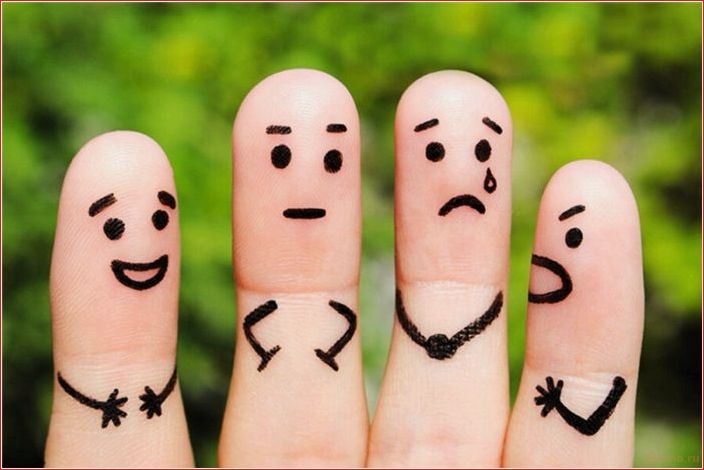
And most importantly, the theory of temperament must be used as often as possible for personal growth and assessment of the positive potential inherent in a partner. In this way, what is often called happiness is achieved in a relationship.


