
Good or bad: 10 facts about fetish
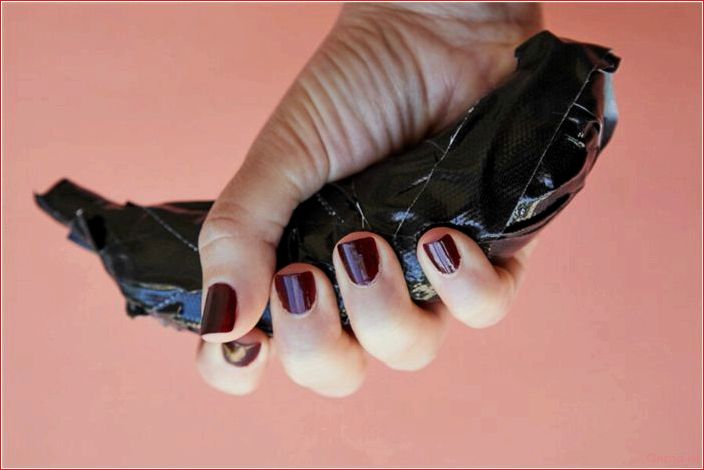
Foot fetish, voyeurism, exhibitionism, regular red hair fetish, freckle fetish. Almost everyone has a fetish. So find out more about them!
Contents of the article:
10 facts about fetish
- What is a fetish?
The term was first introduced at the end of the 19th century by a psychologist named Alfred Binet, who lived in France. He called fetishes sexual arousal and attraction to inanimate objects such as wood, shoes, medicines and smells.
Psychologists divide fetishes into biological and inanimate objects. Animated fetishes relate to people: fetishes for legs, arms, buttocks, pubic hair, a certain body shape, breast shape, or a certain behavior with a partner or partners (spanking fetish with the risk of getting caught).
Inanimate fetishes are object fetishes. These can be both objects related to sexual life (for example, stockings, bras, latex, fur), and things that have nothing to do with sexual life at all — for example, mannequins (seriously!). ), mirrors, have a fetish for trees.
- How is a fetish different from kink?
Kink and fetish are sometimes used interchangeably. However, fetish is an older term and kink is a newer term that is now used in a more positive way. This is one opinion.
Another opinion: a fetish is a person’s fixation on a certain object, thing or appearance of a sexual partner.

For example, a fetish for red hair, muscular arms, freckles. Or, more unusually, leg amputees, large age or height differences. Or — very strictly — about urine, feces and blood.
A turn is a person”s excitement about a particular behavior.
For example, Papa Kink is a softer version of BDSM, where one partner represents the parent (usually “Daddy”, but sometimes Mama Kink) and the other the obedient child.

In general, however, twisting is a more ambiguous concept, and its boundaries have not yet been fully defined. For example, they often say: “I have a love spell on.”, adding something completely unrelated to their sex life or arousal.

- How is a fetish different from a simple sexual preference?
Every person has the right to sexual preferences. Some people like tall, slender, thin blondes who look like Legolas, others like plump brunettes with greasy skin, a hot temperament and a southern type of appearance.
Some people love gentle and measured sex with silk sheets, others prefer rough and extreme elements. And that”s absolutely normal. What distinguishes such preferences from fetishism?
In general, nothing. In general, in a normal society you have the right to say: “I have a fetish.” You have the right to say — and you will probably get it right: “I really like it.” What does it mean? This is because the concept of “fetish” has become quite ambiguous and part of normal everyday culture.

Read also: Fetish — what it is, where it comes from and what to do with it
If not in a sexual context, then at least you”ve probably heard this term from the song by the band “Picnic”. But did you know that you can trust him?
However, from a medical perspective, the difference between a fetish and a preference is over-obsession. In other words, if you prefer red hair and freckles, but you really like a girl”s personality and fall in love with her, then it generally doesn”t matter what her appearance is. The calm sexual experience of her arousal is a sexual preference. “Preferred, but not required.”
However, if without some element in her sexual life she cannot be normally aroused, experience orgasm and satisfaction, then this is already excessive fixation, that is, fetishism.
24 facts about animals that are actually fiction!
- Where does fetish come from?
Little is known about this. Psychologists call the following factors together or individually. For example, if a person experienced severe pain for sexual reasons as a child, this may be the result of trauma. Visualize your situation over and over again to make sure you are in control.
Alternatively, a fetish may be the result of “imprinting” — that is, during the period of active formation of sexuality (and in childhood and adolescence a person goes through several such periods), a teenager or child was impressed by something so strong that for the first time in his life he experienced strong sexual arousal or caused sexual release. From then on, the connection between the object and the release of sexual pleasure became ingrained in his mind.
The third theory is learning theory. She says fetishism can arise during interactions with a partner. I mean, look: you”ve never had a foot fetish. But you met a girl (or met a guy) who liked it. She convinced you to try it. You tried it, saw how much she liked it, got turned on by her reaction, and then had great sex.
The short answer is no, as long as the fetish remains a harmless preference. You have a right against this. As long as you don”t hurt yourself or others by engaging in fetishism, you”re fine. However, if you have a growing desire to harm (or be harmed by) others, for example, or if you are putting your social life at risk because of your fetish (for example, if you are an exhibitionist or voyeur) and cannot control it, it may be wise to seek professional help. a psychologist to help you think about where your fetish comes from and how to change the behavior associated with it.
- Where did this term come from?
The word “fetish” comes from the Portuguese word “fetico”, which means “charm, magic”. It”s very poetic. By the way, the correct stress is not on the first syllable, but on the second.
In fetishism, socialization and the culture in which a person was brought up play an important role. For example, Japan. There, men are literally surrounded by images of female students who are perceived as bright, pure and unsullied. There is an element of taboo and a desire to go against the generally accepted culture, which is why many have a fetish for schoolgirl panties and dirty, sweaty school uniforms.
For the same reason, for example, with the growing popularity of the BDSM genre in pornography, the popularity of fetishes of dominance and submission is also growing. In other words, people absorb sexual images from their environment and form corresponding fetishes. This is when a person is influenced by something that is considered taboo in society — he wants to break a taboo or he is turned on by the thought of how “dirty” he is. boy” or “dirty girl”, this violates it.
The most common: fascia of the foot — foot fetish — fetish for certain breasts in women (small or large), fetish for long or short hair, presence or complete absence of body hair, fetish for lace underwear, tattoos, attraction to 20-20 older or elderly people.
The most bizarre ones are: lithophilia (arousal by stones), activism (attraction to sunlight), circleophilia (attraction to wood), agalmatophilia (attraction to mannequins), formicophilia (arousal to insects; there is also hentai on this topic). (What”s never good for you is better for you — don”t Google it).
It”s okay if you have fetishes and want to implement them in your sex life. The most important thing is that everything is mutual, voluntary and by mutual agreement. As long as everything is done as agreed and occurs without risk to life and health (physical and psychological) — everything is fine. This is broken? It”s time to sound the alarm, leave this relationship and consult a psychologist.


