
Sigmund Freud: The Contradictions and Riddles of the Harbinger of the Sexual Revolution

Sigmund Freud gained fame during his lifetime. Some considered him a genius, others a fraud. Freud”s theories continue to intrigue people, and scholars are forced to seek both confirmation and refutation of his ideas. He believed that women were jealous and ignorant, but he was the first to reveal to the world the sensual nature of women.
Article Contents:
He said that children also have sexual experiences, terrorizing the entire intelligentsia. He abused drugs and made many of his acquaintances dependent on them. At the same time, he held very puritanical views, believed in God (though he could not speak openly about it), was a respectable family man, and was the first to test his own psychoanalytic theories on himself.
A Life in Search of Purpose
Sigmund Freud was born on May 6, 1856. From childhood, he was instilled with a belief in a great future, and his successful education came at the expense of his other children (the founder of psychoanalysis had seven other siblings). Apparently, the foundations of self-respect, a belief in his own exceptionalism, and an intolerance of other people”s views were laid.
His extraordinary intelligence and abilities did not help Freud quickly find his calling. For eight years, he studied medicine at the University of Vienna and worked for another four years at the Vienna City Hospital, becoming increasingly convinced that medicine was not his calling. There, he gained a reputation as a brilliant neurologist, coining the term “cerebral palsy,” which is now widely used.
Freud then began using narcotics and was convinced of their superior properties. He recommended them as anesthetics for surgical procedures, headaches, and depression. He recommended them to friends and patients. He also administered narcotics to his pregnant wife and documented in detail how these substances affected fetal development. When the obvious harm caused by this drug was recognized, Freud made sure to delete all records related to his research.
After a trip to Paris in 1885, Fred entered a new phase of his life. There, he interned with the renowned psychiatrist Jean Charcot. Their joint research helped uncover the connection between the symptoms of hysteria and problems with expressing sexual desire. After completing his internship, he continued working with patients suffering from various neurological disorders. Hypnosis proved unsatisfactory, so he began searching for ways to “talk” to patients without putting them under hypnosis.


A solution was found unexpectedly. Freud began using everything the patient said to better understand their psyche. At the same time, he developed the method on which his work was based—free association. He allowed people to say whatever they wanted on topics suggested by the doctor. Without any pressure, the patient was immediately freed, and the associations moved into the realm of traumatic situations and disturbing memories. This became the driving force behind the complete abandonment of hypnosis and the beginning of psychoanalysis. Freud”s assertion, the idea and memory of repressed and inadequately experienced sexuality, led to a wave of hysteria that shook the nation and shaped an extremely negative image of Freud. Even more shocking was his claim that childhood experiences (related to the same sexual sphere) are crucial for the development of the psyche.
Freud continued his research and even tested his own methods, despite numerous opponents of his theory. After the death of his father, he began to suffer from neurosis and began self-analysis. It was this experience that formed the basis for his first independent study of psychoanalysis, “The Interpretation of Dreams” (1899). Freud considered it his most important work, but the scientific community did not appreciate it. However, like-minded individuals also emerged within the theory.

Gradually, their circle expanded, and new works began to be published. Freud”s fame grew, and the number of patients and students increased. But this happiness was short-lived. The division of student classes and the attacks of enemies who criticized his theories, among the root causes of all Freud”s problems, were a very tired Freud. But nothing could turn him away from the theories he believed in.

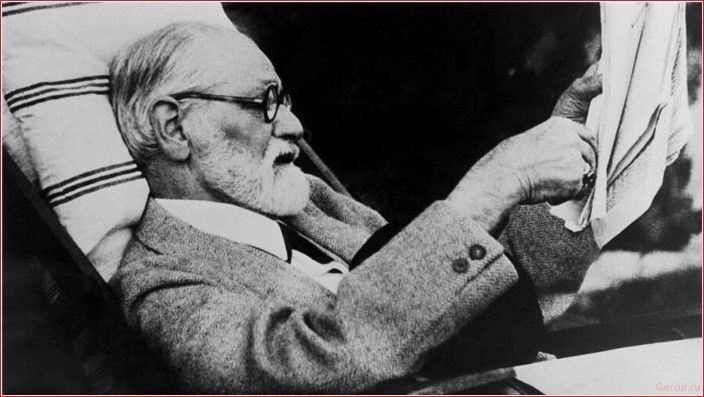
World War I shook Freud and his psychiatric clinic—the number of patients dwindled, and the financial situation worsened daily. He fell into a severe depression, but did not abandon science.
The end of the war is not a relief. There was not enough money, savings had to be spent, one of his daughters died, and in 1823 Freud was diagnosed with cancer. The operation was unsuccessful and he almost died. The disease could not be stopped and he had to have part of his jaw removed. Life became completely dark. Freud stopped giving lectures — his speech became unintelligible, his prostheses caused pain and left unhealed wounds.
In 1833, Adolf Hitler became Chancellor of Germany. The new German ideology had nothing to do with Jews and psychoanalysis. Many people like him were arrested, but Freud refused to leave Austria. He only thought about emigrating in 1938, when the persecution of Jews began after the annexation of Austria to Germany. His daughter was arrested, and he himself was interrogated by the Gestapo. His desire to leave for England was approved, but a huge ransom was set for him. He didn’t have that kind of money; influential patrons helped him. Freud was able to leave with his family; his old girlfriends, students and patients paid his debt.
Unable to defeat cancer, which deprived him of his last strength, in 1939 he decided to die. After persuading doctors to give him a lethal dose of morphine, Sigmund Freud died on September 23, 1939 and was cremated.
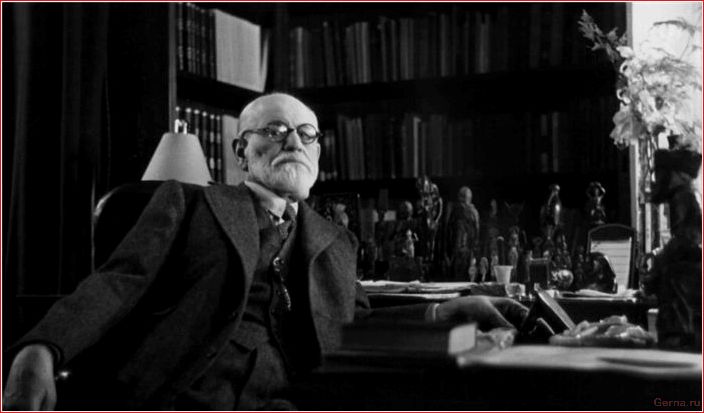
The Great and the Terrible: What made Sigmund Freud famous?
The Great and the Terrible: What Sigmund Freud Is Famous For
Read also:
We study the 5 phases of human sexual development according to Freud At the beginning of the 20th century, Freud”s extraordinary psychoanalysis of sexuality became a bombshell that exploded the scientific community of its time. A distinctive feature of Sigmund
His main conclusions:
“He told the world that every person has a sex drive (sexual energy) and it is this that controls all human behavior.
— He stated that harmonious development of personality is possible only after passing through the stages of psychosexual development. In this case, the stage takes place in childhood, and the “passage” itself is based on the stimulation of a certain root zone.
– The first one said that women not only enjoy sex, but even have their own fantasies on this topic. At the same time, he considered women to be the model of childhood and the cause of all problems. This did not stop him from gaining popularity among patients, who not only enjoyed sharing their sexual fantasies, but also did not like it when they were revived. Freud himself did not allow such freedom, but some of his followers took advantage of this opportunity.
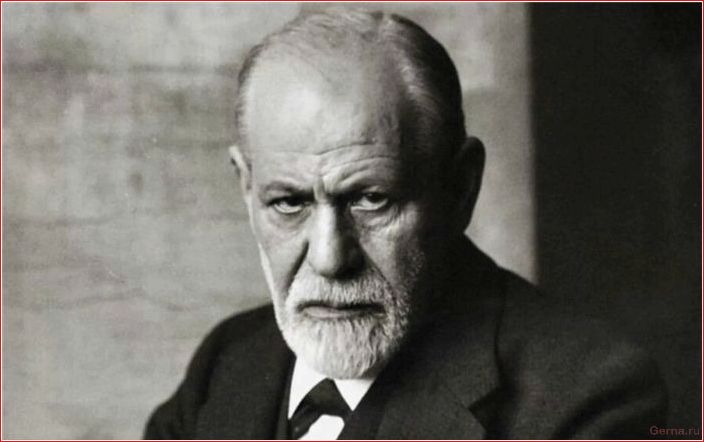
“I even infiltrated his followers.” This claim that women envy men for having phallic bodies is a “misconception” that she longs to possess to the fullest.
— The exclusivity of the model of the psyche according to Freud’s theory can be formulated in one phrase: the unconscious is the only one who can control consciousness. The unconscious is stronger than the conscious because it can control the conscious, but the unconscious should not do that. At the same time, there is no peace of mind. This is an endless struggle between its three components. It, I and Super-I.
— Spiritual protection is his term. He argued that self-denial is the most common way to hide your true desires from yourself and others. In particular, sublimation is the realization of sexual desire through creativity, religion and even humor.
“Freudian slip”: what do slips, slips and typos mean?
The “Freudian Slip”: What Do Slips of the Pen, Typos, and Misprints Reveal?
One of the earliest studies was proposed in a very original form. Three groups of men (heterosexual) were typed, and an elderly professor, a revealingly dressed attractive girl and an electric shock were chosen as a means of subliminal influence. The elderly professor was working with two groups, one of which was enjoying the company of beautiful graduate students. The men were first asked to read silently, then asked to say a few words out loud. In all groups, reservations were allowed (phrases were specially edited in such a way as to cause the replacement of letters in words).

Freud”s theory was confirmed that in the presence of a beautiful woman, men will suppress their sexual desire and make reservations with sexual overtones.
The third group was terrified by the threat of having an electrode attached to their fingers and receiving an electric shock. In this group, reservations often related to currents and electrical discharges. At the same time, the total number of bookings was almost the same in all groups.
Reservations are rather the work of consciousness, trying to replace obsessions, no matter what we are talking about, about electric shock or beautiful girls. And the reservations of the control group, which were not targeted by the action of the girl or the electric shock, are not just thoughts, but the result of the character’s “aggression”.
Thus, in most cases, a slip of the tongue is completely innocent in nature and is the result of the mind trying to solve some problem or being in a state of stress and anxiety. However, the claim that reservations reveal our true desires has not yet been confirmed.

Coming from childhood: psychosexual development according to Freud
From Childhood: Psychosexual Development According to Freud
Sigmund Freud: Beyond Consciousness
Further development begins when the child is taught to use the potty (anal stage). False precision creates two types of anal retention (pettiness, pedantry, craving for excessive order) and anal thrusting (impulsiveness, cruelty and even sadistic tendencies). Both types are formed in the persistent desire of parents to put the child on the potty, regardless of his wishes.

According to Freudian theory, the age of 3-6-7 years is of paramount importance in the formation of personality. At this age, children discover their genitals (phallic stage). At this age, the “Oedipus complex” (or “Electa complex”, girls) manifests itself equally in boys and girls. The desire for sex to replace the parent of the same sex, to ostracize him and completely take over the opposite parent.
Men stuck in this phase become boastful, feel the need to prove their masculinity (sometimes in unexpected ways), and try themselves in the role of seducer, depending on the type of dojuan. Women who have not overcome the phallic phase seek to conquer themselves through unstable sexual relationships, flirting and deprive themselves of the desire to put themselves above a man.
Potential phases occur when children benefit from communication and learning (ages 7-12). There is satisfaction from participating in various activities. Delays at this stage can lead to the formation of the personality of a workaholic, preoccupied with career success, or an inferiority complex (in case of poor academic performance).
Puberty (genital stage) completes the human development cycle. The movement of sexual energy becomes stronger and begins to focus on certain objects. At this age, everyone goes through a period of “homosexuality” (when preference in communication is given to representatives of the same sex). Gradually, interest switches to representatives of the opposite sex. At this point, the development of personality and the end of a person can be considered as psychological maturity.

According to Freud, personal maturity means the ability and desire to create something useful for society and love, and not simply view a partner as a sexual object.
Sayings and aphorisms of Sigmund Freud
Quotes and Aphorisms of Sigmund Freud
“Limited pleasure only increases its value.”
Nothing happens by chance, everything has a cause.”
“Ideal, eternal, hate-free love exists only between drug addicts and drugs.”
“Only the fulfillment of childhood dreams can bring happiness.”
Everything we do in bed is wonderful and absolutely right. As long as you both like it.”
“If you can”t find anything to improve in your relationship with your partner, you”ll both be terribly bored.”

People are more moral than they think and more immoral than they imagine.”
The most incredible and shocking facts about the sexual revolution are further in our article!
Sigmund Freud (Brief History)


