
Stealth — why a man takes off the condom during sex
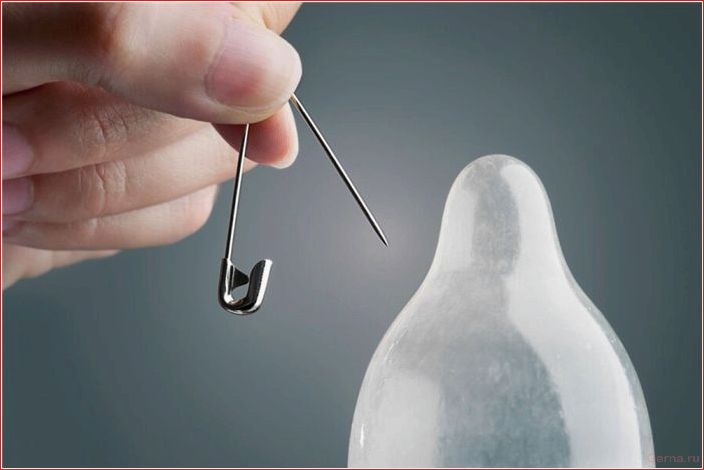
Recent studies of sexual behavior and criminal cases occurring in Europe have focused public attention on the concept of stagnation.
Contents of the article:
What is stealth
“Secrecy is the latest trend in dangerous sex.”
“Stealthing: The Disturbing New Sex Trend You Should Know About.”
Here are two headlines that talk about the practice of removing condoms without your partner”s consent. There really have been a lot of big words like this in the titles of news stories lately. This topic recently gained prominence through an article by Alexandra Brodsky published in the Columbia Journal of Gender and Law.
In their study, the researchers examined the prevalence of incidents involving strangers in the United States and how this behavior compares with local legal definitions of rape and sexual assault.
In Europe, the topic of Stealth has received wide publicity in connection with a recent criminal case initiated in Switzerland. He was convicted of rape after removing a condom without his partner”s consent. Indeed, the prosecution”s lawyers presented Brodsky”s research to the court.

The rape charge was subsequently changed to a charge of cruelty. However, while there is no clear cut point on the list of sexual offences, it is clear that such behavior should be prosecuted.
The harmful effects of stealth
Of course, the most obvious danger of this behavior is that men may infect women with sexually transmitted diseases or expose them to the risk of unwanted pregnancy.


In his study, Brodsky also shows how such practices traumatize the female psyche. Indeed, secrecy turns sexual contact into a consensual act of violence. This experience can then trigger a range of negative psychological reactions, such as fear of sex with that partner or men in general, and result in post-traumatic stress disorder (PTSD).

“In addition to fearing some of the negative consequences of being secretive, such as pregnancy and sexually transmitted diseases, women perceive everything from humiliation to removing condoms during sex as a violation of active consent. This stress can lead to a strong distrust of men and a reluctance to engage in sexual contact with someone. Women are simply afraid that history will repeat itself with a new partner,” Brodsky writes.
Read also: 10 Interesting Reasons Why Men Moan During Sex
Everyone knows that moaning during sex is predominantly a female activity. However, statistics show that 70% of men also moan during.
Why do men do this?
There is no consensus on this issue about why some men allow themselves to behave like this. It all depends on the individual ideas and desires of each person.
In her research, Brodsky examines the practice of stealth through in-person and online interviews. It refers to thematic forums and communities on the Internet that teach people how to create stability during sex, and also explain the reasons for this decision.
One of the groups for which the author gives several examples is on a social network called The Experience Project. There, users exchange stories about stability and give advice to other participants.
“When trying to understand why men remove condoms during intimacy and why they find the process pleasurable, many motivations can be imagined. The problem appears to be the element of unpredictability and risk to physical sensations and adrenaline-enhanced pleasure.
Beware, danger: what is stealth and why men do it

However, as I found out, most online cooking participants believe that the initiators of the stalls and their defenders justify such behavior as natural male instincts. They believe that men exhibit a natural desire to dominate. Moreover, they consider this absolutely normal,” writes Brodsky.
In addition, there are various fetishes and perversions. For example, there is a fetish for reproduction. Men with such deviations derive sexual pleasure from the thought of the risk of unwanted pregnancy.
There are even completely unhealthy and terrible reasons for stealth. Some people belong to the so-called “bug hunter” subculture. Representatives of the subculture are either actively trying to infect people with HIV, or already have this disease and are trying to spread it by communicating with as many partners as possible.
One participant in a survey conducted by Healthline Gender and Reproductive Health spoke about his experience with an ex-partner and the motivation for such behavior. The man described his behavior in terms of a common fear of going to bed.
“At some point I realized that I was just scared, and now I realized that I could not cope and give in to a loser, otherwise I would be in danger. I had to choose the lesser of two evils, but in the end I chose the greater,” he said. The man claims that this is an isolated incident, and since then he has not resorted to such a practice.
Is stalling really a new trend?

Of course, slippage is a phenomenon that does not correspond to normative concepts. This is a serious violation of a partner”s boundaries and humiliating behavior that can lead to irreversible consequences.
However, whether the disruption in sexual trends is rapidly accelerating, or whether the trend as a whole is rapidly accelerating, is highly debatable. In Brodsky’s study, for example, the word “trend” does not appear even once. The authors of the scientific study do not focus on how often stability is observed in the United States or in other countries. From this study it is clear that such phenomena do exist and are practiced, but it can hardly be called a trend.
The questions that Brodsky and others who talk about stealth are actually raising are most likely these. How should the legal system respond to this behavior and should any action be taken?


