
Heterosexuality and Homosexuality as Two Types of Sexual Orientation. History and Terminology.

If there is a history of homosexuality, then why is there no history of heterosexuality? Naturally, heterosexuals have a history, just like heterosexuals, whether they realize it or not.
Contents of the article:
Modern “heterosexual identity” appears to be a modern social construct. Of course, the term “heterosexual” is a recent invention, and dictionaries didn”t include this definition until the 1930s. However, it is clear that heterosexual activity and heterosexual relationships existed in the past!
The main difference between heterosexuals and homosexuals of the past is that, in many cases, heterosexual relationships were statistically and culturally normative. One of the problems with normativity is that it is effortless, unstructured, and seems truly “natural.”
However, one doesn”t have to look far to understand who heterosexuals are and discover a huge diversity of past heterosexual identities and heterosexual “norms.” 3 Examples:
In living memory, the socially expected age of marriage has increased by approximately five years (from 19-21 for women in the early 1950s to 25-27 in the 1990s). What was normal in 1950 would be scandalous today.
In many societies, polygamy is a social norm, if not statistically widespread. Examples include Old Testament Israelite societies, various Muslim societies, traditional Chinese societies, and some African societies. In other countries, monogamy receives its own moral justification.

In many pre-industrial societies, the age of sexual debut was close to puberty. Industrial societies tend to delay the onset of legal sexual activity, continuing to perpetuate the myth of “normality.”
Sources of information on the history of heterosexuality are relatively numerous. Unlike “deviant” sexuality, where textual repression occurs and many records are likely to be coded in some way, heterosexual “normality” ensures the survival of sources. One simply needs to look at them and subject them to historical analysis.
In addition to heterosexual norms, there is also a history of heterosexual social deviance. In many societies, some people reject sexual rules and adopt an apparently “free” identity. The whole phenomenon of libertinism is worth studying because looking at the boundaries of social structures can often help us understand the whole picture of social order.

Distinguishing Heterosexuality
From the dark shadows of the medical world of the 20th and 19th centuries, a group of people known as heterosexuals emerged and were recognized in the bright light of modern times.

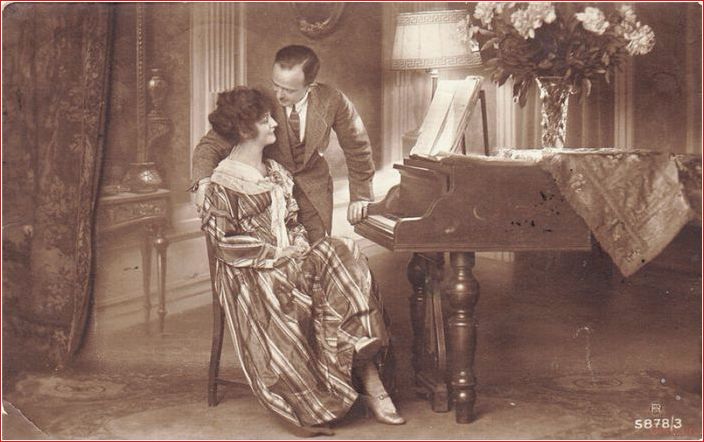
Heterosexuality in this century began defensively, as an officially sanctioned personal practice of the respectable middle class and as an officially sanctioned clownish practice for the pleasure of young urban workers, Southern blacks, and Greenwich Village bohemians.
By the late 1920s, however, heterosexuality had triumphed as the dominant and sanctified culture. The first quarter of the 20th century saw the public, assertive debut of heterosexuality, a public, assertive debut that homosexuals would repeat by the end of the century.
The discourse on heterosexuality only reached its conclusion in American popular culture in the 1920s, when he was forced out of it. Gradually, heterosexuality became a stable feature of normal sex. The association of heterosexuality with perversion continued into the 20th century.
In the early 20th century, heterosexual and homosexual were still non-standard and ambiguous medical terms. There were no heterosexuals, but they had not yet reached the point of normality.
Dorland”s Medical Dictionary, published in Philadelphia in the early 20th century, continued to define “heterosexuality” as “an abnormal or perverse attraction to the opposite sex.” Dorland”s heterosexuality and new “appetite” were apparently equated with hunger. However, this craving still deviated from the norm.
According to the 1933 First Supplement to the Oxford Dictionary, Dorland”s heterosexuality was an “aberration or perversion” and his definition was “misapplied,” but contrary to the OED, Dorland”s heterosexuality was a perfectly legitimate understanding of heterosexuality and conformed to reproductive norms.
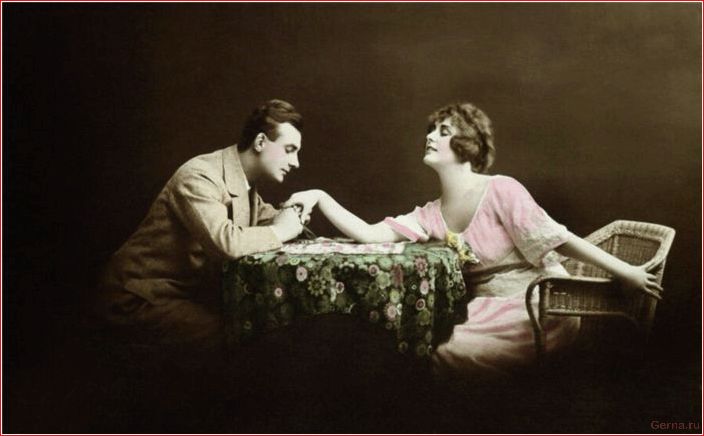
The 20th century saw a decline in the legitimacy of this reproductive imperative and a general acceptance of a new principle of heterosexual pleasure.
Read also: Homosexuality: it is not a disease, but a non-traditional sexual orientation
For people of non-traditional sexual orientation, the start of the new millennium was a breath of fresh air. Finally, a significant portion of society accepted it.
Gradually, heterosexuality came to mean normal sexual sensuality unrelated to procreation. However, it was only in the mid-1960s that heteroeroticism was completely separated from reproduction, and the pleasure of sex between men and women was legitimized.
Searching for Order
Between 1877 and 1920, Americans began a “search for order.” This is documented in a book of that title by historian Robert H. Wiebe. Although Wiebe doesn”t mention it, the search for regularity created a new standard model of heterosexuality in the sexual arena.
These parallel steps in the early 20th century standardized railroad track widths, time zones, business and manufacturing procedures (discussed by Wiebe), and also tested and normalized intelligence, femininity, and masculinity. In 1923, “heterosexuality” first appeared in the authoritative Merriam-Webster New International Dictionary. “Homosexuality,” oddly enough, appeared 14 years earlier, in 1909, and was defined as a medical term meaning “morbid sexual passion for one sex.”
The ads for bad homosexuality appeared before the ads for bad heterosexuality. In 1923, Webster defined “heterosexuality” as “honey.”
This term means “morbid sexual passion for the opposite sex.” “Heterosexual love” first appeared in the thick “second edition” of Webster”s Unlimited in 1934 and is still defined in the modern way that dominates today.
There, heterosexuality is finally defined as “the manifestation of sexual attraction to the opposite sex.” Normal sexuality. Heterosexuality finally achieved standard status.
“The Ricordi Family” series.
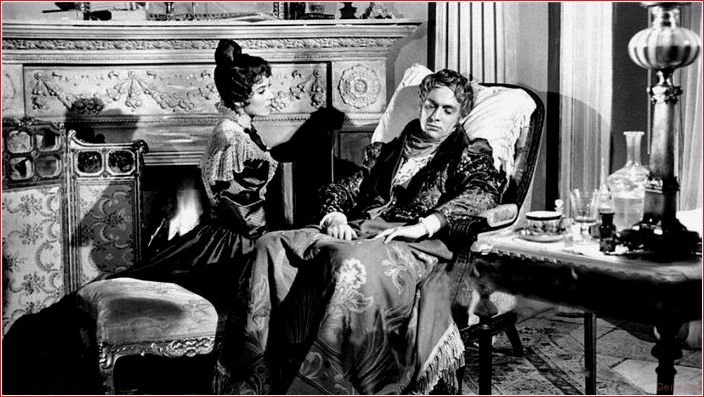
In the same year, 1934, Webster”s “homosexuality” also underwent a change. It is simply “erotica for one.” “sex.” The medical roots of both terms are no longer mentioned. Heterosexuality and homosexuality have been established in the standard American system.
In 1924, The New York Times declared: “For the first time, heterosexuality became love and swept away its name.” On September 7 of that same year, the term “heterosexual” first appeared in The New York Times Book Review in a commentary on Sigmund Freud. There, in a long and scathing review of Freud”s group psychology and ego analysis, psychologist Mary Kate Isham spoke of “repressed heterosexuality” and “heterosexuality.”
By December 1940, when the risqué musical “Pal Joey” opened on Broadway, a tune called “Zip” had shed the image of stripper Gypsy Rose Lee. Heterosexuality. The lyrics documented the emergence of heterosexual identity in popular culture.
Queer education. Orientation, identity, and the history of sexuality (18+)
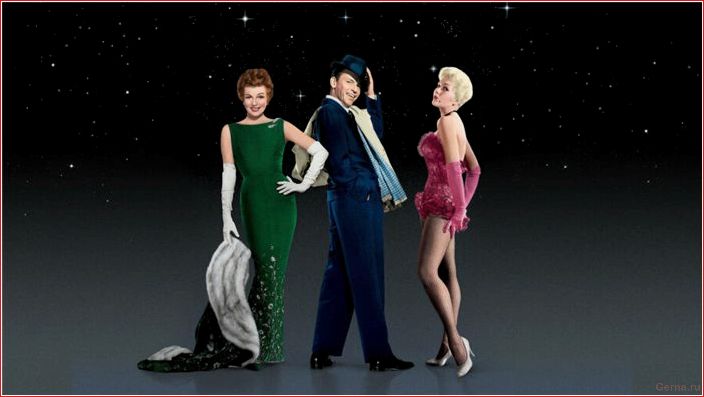
The musical “Pal Joey.”
The “non-homosexual,” a new being defined by who they are, emerged among actors of erotic characters in the 20th century. In this case, “straight” is a state in which a person is capable of taking risks, whether they can be accepted or not, depending on the “practice” (feelings are not an issue). In this case, a gender variant is defined and classified—the two settings create a playable game.
The Cult of Domesticity
The Cult of Domesticity
In opposition, the Sexual Freedom Party sought to expand the heterosexual ideal to include a broader gender ideal than usual and a range of non-reproductive, assumed, and illegal behaviors. However, this liberal sexual reform actually helped ensure the dominance of heterosexual ideas.
Kinsey Continuum
Kinsey Continuum
Sexologist Alfred Kinsey
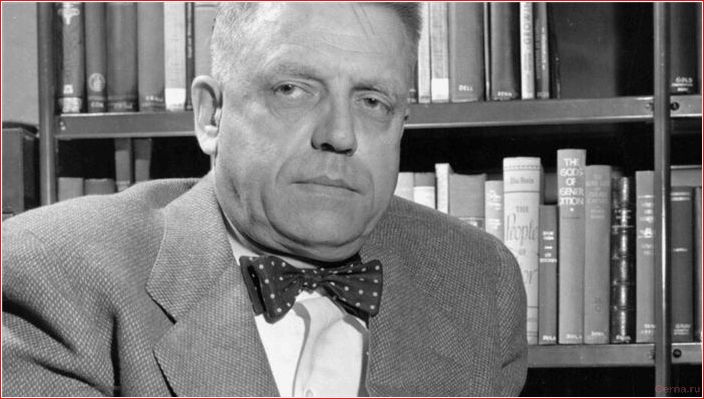
His modification of the hetero/homo polarity actually suggests that there are degrees of heterosexual and homosexual behavior and emotions. However, this famous continuum convincingly confirmed the idea of the splitting of sexuality into heterosexual and homosexual.
Kinsey”s “Heterosexual Homosexual” ratings redefined the hetero/homo binary in the public consciousness with new confidence: Kinsey”s ratings ranged from zero to six, but were precise, quantitative, and scientific. Thus, his scientific and influential sexual liberalism supported the hetero/homo division and gave it new life and legitimacy.
Kinsey also clearly objected to the idea of absolute opposition between heterosexual and homosexual people. Emphasizing the difference between exclusive heterosexual and exclusive homosexual behavior and feelings, he denied that people are “two separate populations, heterosexual and homosexual.”
The world”s population, he commanded, “cannot be divided into sheep and goats.” (This identification of the biblical ratio phor positions heterosexuals as sheep, combined with conformity, and homosexuals as goats, making goats ridiculous).
Kinsey emphasizes that Hetero/Homo emphasizes that the division of people is not a business, but a society. As a liberal reformer, he challenged the social and historical division of people into heterosexuals and homosexuals because he saw how these labels were used to denigrate homosexuals.
Driven by reformist impulses, he rejected the social reality and deep subjective power of historical traditions that, since the beginning of the 20th century, had helped to divide the sexual population into two parts and establish social and personal reality and homosexual identity.
From the 1890s to the 1960s, the terms “heterosexual” and “homosexual” migrated into popular culture: sexually committed citizens and perverted unbalanced foreigners, sensual insiders, greedy criminals, heterocentrics, homomarginals, hetero-majority and homo-minority.
With new strict boundaries, new genders appeared, and the erotic world ceased to be polymorphous. The term “heterosexual” created a new distinction based on sexuality and eroticism. This is a norm that worked to assert the superiority of women over homosexuals and men over heterosexuals. Feminists have questioned this hierarchy of sex and pleasure.
And from our article you will learn who intersex people are and what gender they belong to.
How to determine your orientation and other questions to ask a sexologist. 18+


